I · What wealth really is · Chapters 1–7
Choices, income and holdings, net worth, personal enough.
Volume 07 of 07 · Multiply · Typeset version complete
How to turn income into lasting freedom
Personal wealth building for employees, freelancers and entrepreneurs: from surplus through ownership, structure and protection to deliberate use.
Philipp Rückert · 211 pages · 50 chapters · 50 illustrations
Provisional cover design for announced titles
The central model
Income only creates lasting options once surplus becomes ownership, stays protected in a sound structure and has long enough to work. Use gives the cycle its purpose; reinvestment feeds returns back in.
Reinvestment links returns back to ownership – not a linear endpoint but a cycle with deliberate use.
Seven parts · 50 chapters
Choices, income and holdings, net worth, personal enough.
Gap between income and expenses, fixed commitments, and conscious consumption.
From surplus to ownership and long-term stakes.
Bring the building blocks together and arrange liquidity and diversification sensibly.
Bearable risks, reserves, and protection against irreversible losses.
Compound interest, reinvestment, costs, and purchasing power.
Time, use, passing on, and a life beyond the next number.
Six chapter examples
Why a large inflow doesn't yet create a large reserve.
Measure income per period and net worth at a reference date separately.
Why rising income only builds wealth when not everything grows along with it.
Let lasting expenses grow more slowly than lasting available income.
Why reusable value doesn't have to grow linearly with your time.
Build reusable value only where demand, rights and follow-up costs are understood.
Why diversification is meant to spread different risks.
Spread your wealth so that no single failure hits several indispensable goals at once.
Why a long time horizon often looks unspectacular in the short term.
Give a sound undertaking time, without losing sight of its condition.
Why the most important balance sheet also includes what made your wealth possible.
Align your wealth system with the life it should make possible today and later.
Who the book is for
What it is not
The book promises no returns, recommends no specific investment products and does not replace investment, tax or legal advice. It organizes principles you can use to examine your own decisions more closely.
Frequently asked questions
Read next
Volume 06 · Allocate
Reinvest, repay, distribute, or set aside: where your next euro does the most.
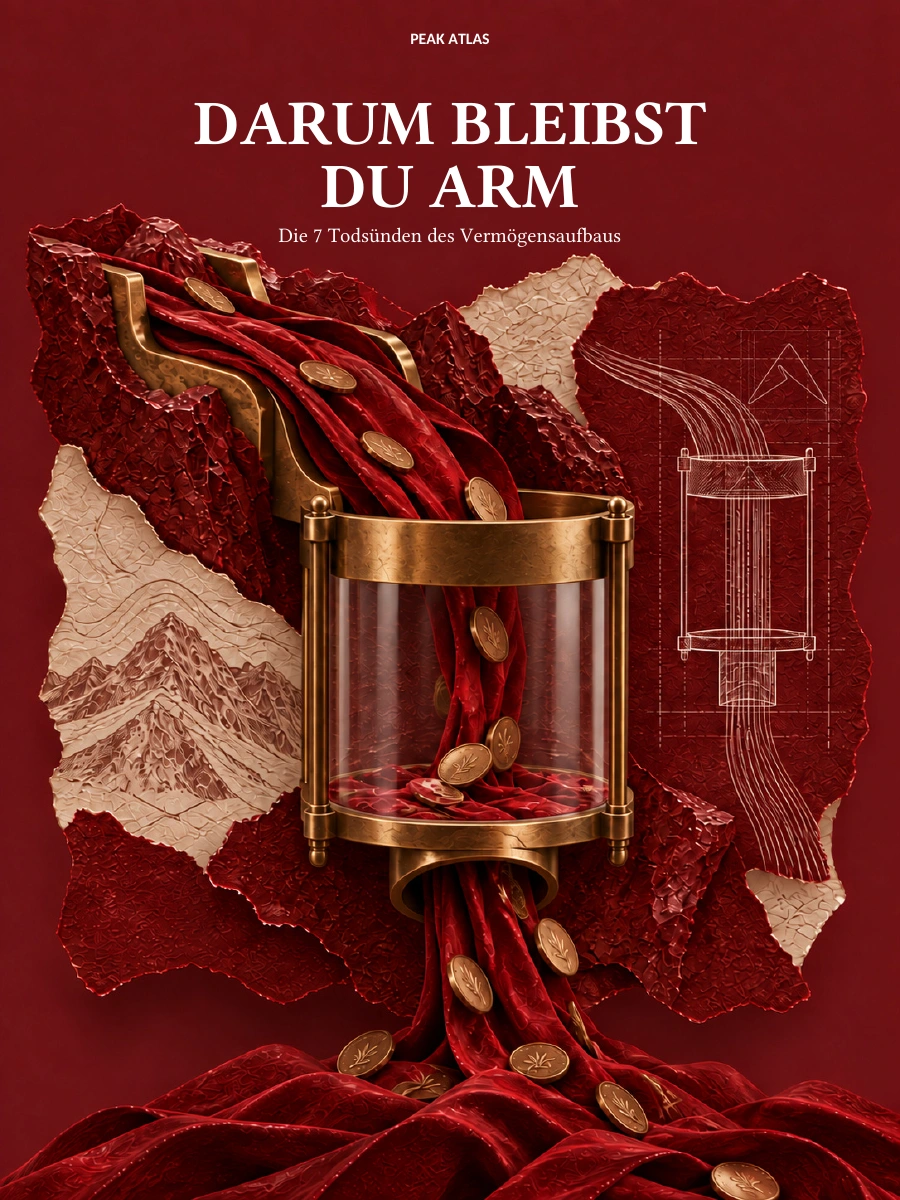
Volume 02 · Behavior
100 illustrated chapters on the thinking errors, habits, and decisions that hold back your wealth building.
Sign in with Google, build your atlas in about two minutes and see your company in one place.
Free plan · Sign in with Google · set up in about two minutes