Peak Atlas

Collaboration · Community & project stories

Experiences you can learn from for your daily work.

Case studies show results. Project stories show the decision behind them: Where did the company stand, what was tried, which question can be applied elsewhere? Here you'll find selected customer projects in this format, and a guide you can use to describe an experience of your own.

Analyze my shop

All stories are based on documented customer projects and link to the respective case study.

Burgundy linen book with a walnut spine, fanned-out pages, velvet ribbon and chrome clasp on deckle-edge paper – a metaphor for knowledge that works as a practical tool.

Project stories

Six customer projects as a learning format

Each story summarizes an existing customer project in three moves. The figures and services are in the linked case study; nothing here is stated that isn't substantiated there.

  1. Universitätsspital Zürich · Recruiting · Email & Social Media
    Starting point
    An open position in internal medicine for which a very specific group had to be reached: young physicians from Germany, Austria, and Switzerland.
    Approach
    Targeted outreach through a medical newsletter and additional distribution via social media, focused on relevant reach in the DACH region rather than broad dispersion.
    Transferable question
    Do you know in which environment your target audience reads anyway, and do you advertise there or everywhere?
  2. SLK-Kliniken · Recruiting · Editorial · Newsletter
    Starting point
    Medical students for clerkships and training rotations in vascular and endovascular surgery; traditional job postings barely reached the target audience.
    Approach
    An in-depth editorial created together with the HR department, showing what students can expect in the department, distributed through two newsletter campaigns and social media.
    Transferable question
    Does your job posting describe a position, or what someone actually experiences there?
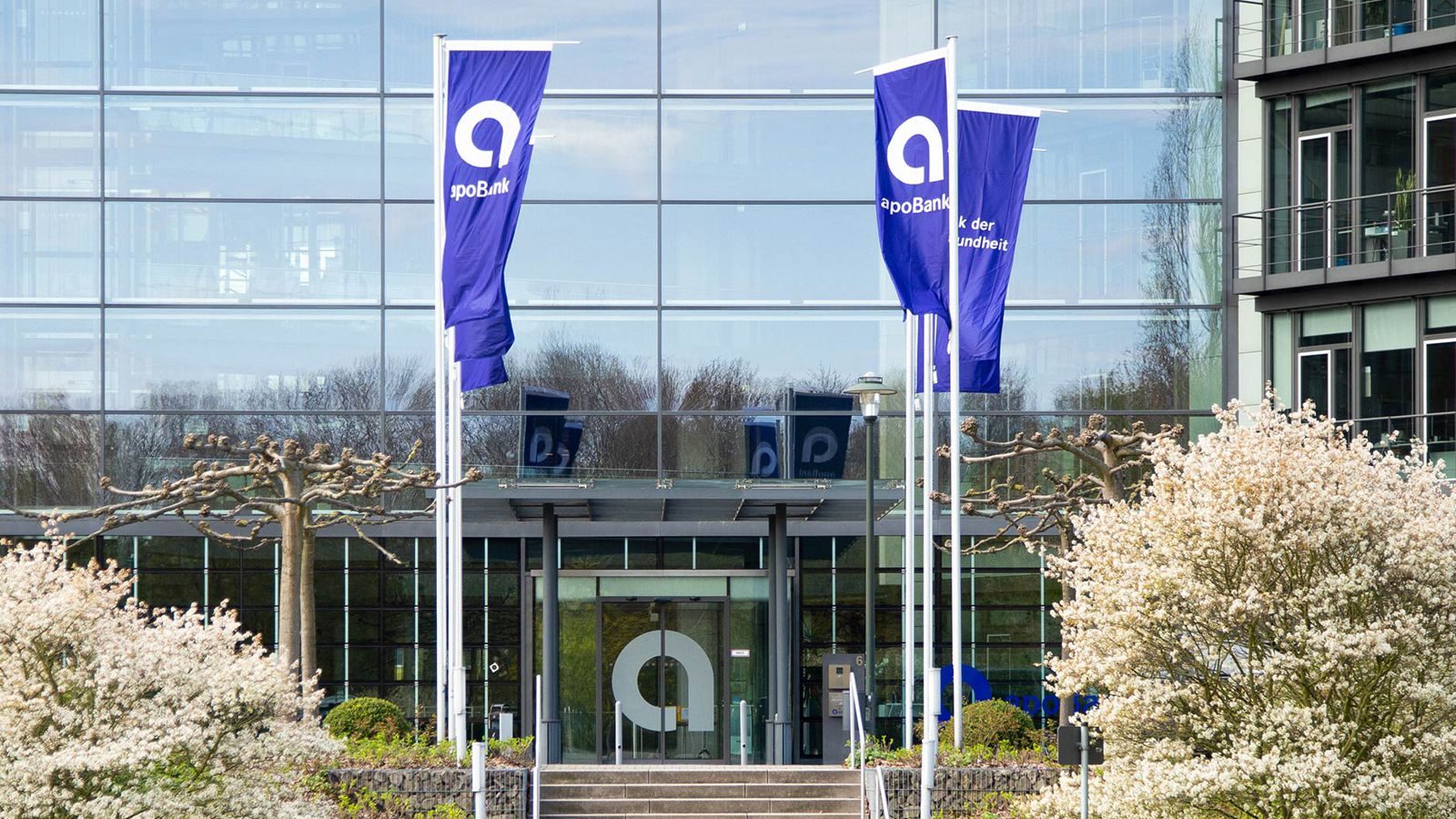
  3. apoBank · Content Marketing · Editorial feature
    Starting point
    A very specific topic needed to become visible to a medical audience; mass reach was not very meaningful for that.
    Approach
    An editorial piece in an already medically relevant environment instead of an ad, integrated into the target audience's usage context.
    Transferable question
    Do you measure attention in reach, or in the time the right people spend with your content?
  4. Jurassic Fruit · Google Ads · E-Commerce
    Starting point
    Around 800 products, of which only about 150–180 are seasonally available at the same time, with limited ordering windows and short advertising periods.
    Approach
    Structure campaigns by fruit category and season, use several Shopping feeds and revised tracking, derive a subscription model from data analysis.
    Transferable question
    Does your campaign structure reflect the availability of your products, or are you advertising things that aren't currently deliverable?
  5. Takewalks · UX · Checkout
    Starting point
    A cluttered checkout with too many steps on a tour platform: conversion hurdles right where the decision had already been made.
    Approach
    User research on the biggest friction points, concrete UX/UI recommendations, and a restructured flow with fewer steps.
    Transferable question
    Do you know at which step buyers drop off, or do you suspect it?
  6. Mühle-Glashütte · Website · Branding
    Starting point
    A web presence that needed to become more contemporary against growing online competition and appeal to younger audiences without losing its history and positioning.
    Approach
    Modernize the design without breaking the brand's character; tell the story of the family and location digitally; bring craftsmanship and contemporary models together visually.
    Transferable question
    Which parts of your presence are tradition that holds up, and which are habit that holds you back?

The stories are based on documented customer projects. You'll find quotes, figures, and scope of services in the linked case studies.

Editorial guide

Six sections for an experience others can learn from

The guide applies to our own stories just as it does to contributions you suggest. It forces honesty, and that's intentional.

  1. 01

    Starting point

    Where did the company stand, what was the problem, how did you notice? No confidential data of third parties.

  2. 02

    Decision

    What was decided, and against what? A decision with no rejected alternative isn't one.

  3. 03

    Implementation

    What was done specifically, by whom, over what period? Tools only if they're needed for understanding.

  4. 04

    Observation

    What was measured or observed? Substantiated details only; label estimates as such.

  5. 05

    Limits

    What can't be concluded from this? What was luck, what was context, what would you do differently?

  6. 06

    Next attempt

    What will be tried next? A good story ends with an open question, not a full stop.

Template

Story template to fill in

The six sections as a Markdown file with guiding questions. You can fill it in offline and submit it later, or just use it internally for your own team.

Suggest an experience

Suggest an experience of your own

The draft follows the guide. It opens your email program; nothing is sent until you do it there. We align form and wording with you and publish nothing without your approval, and we don't promise publication.

* Required for a usable draft. Your inputs stay in your browser; Peak Atlas stores nothing unless you send the email yourself.

Preview of your draft

To: contact@peak-atlas.com
Subject: Proposal for a project story

Hello Peak Atlas, Starting point: – Decision: – Implementation: – Observation: – Limits: – Next experiment: – Approval: – Name and company: – Please agree on form and wording with me before anything is published. I know that publication is not guaranteed.

Opens your email program. The message is only sent once you send it from there. Still open: Starting point, decision, approval, name and company.

Frequently asked questions

Clearly answered.

What are the project stories based on?

All stories are based on documented Peak Atlas customer projects. Substantiated statements, figures, and the respective scope of services are in the linked case study.

Why are there no figures here?

Because numbers without context deceive. The substantiated figures are in the case studies, with period and scope of services. The story here is meant to show the decision behind them.

Will my suggestion be published?

Not automatically. We read every suggestion, clarify open points with you, and agree on the wording. Nothing is published without your explicit approval, and only if the story is useful to others.

Can I contribute anonymously?

Yes. Industry, size, and situation are often enough. In the draft you can indicate whether naming your company is an option.

Start with Clarity. The rest follows.

Sign in with Google, build your atlas in about two minutes and see your company in one place.

Free plan · Sign in with Google · set up in about two minutes